
Events
- Ethereum
- Stanford
- Blockchain
- AI
- Summit
Wrapping up ETHSF: AI Meets Blockchain in the Bay
This year’s ETHSF brought together builders, researchers, and enthusiasts for a series of events covering both blockchain and AI developments.
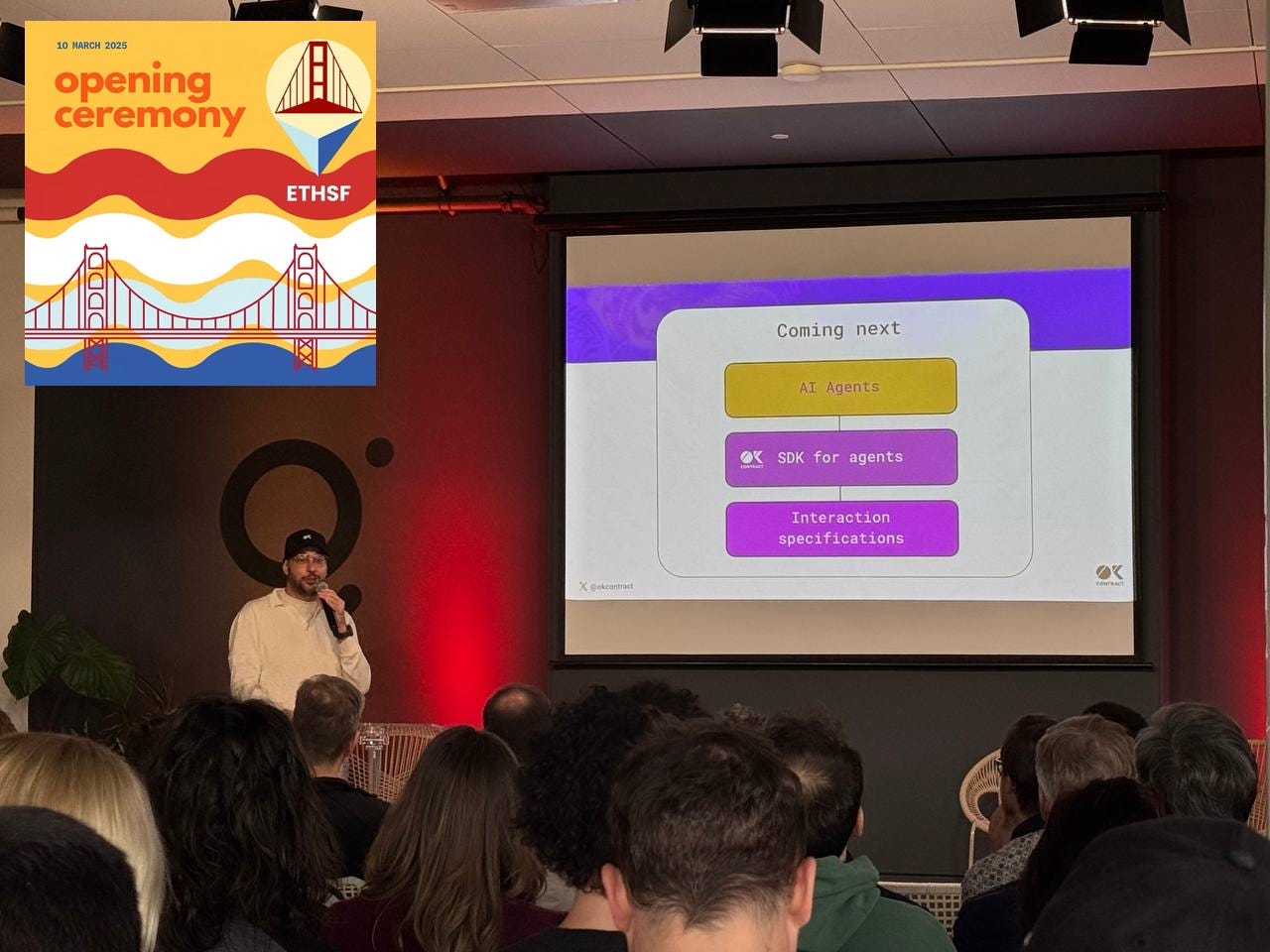
This year’s ETHSF brought together builders, researchers, and enthusiasts for a series of events covering both blockchain and AI developments. For the OKcontract team, March in the Bay Area was packed with talks, demos, presentations, meetups, and networking, capped by a headline talk at the Stanford Blockchain AI Summit hosted by @StanfordSBA. The OKcontract team also presented at the Opening Ceremony, demoed its platform at AI x Web3 meetups organized by @base, @Galadriel_AI and more.
ETHSF Opening Ceremony
During the ETHSF Opening Ceremony, our co-founder Henri Binsztok presented OKcontract’s vision, showcased latest developments and announced the Agent SDK roadmap. During his panel discussion, Ethereum’s co-founder Vitalik Buterin gave us a shoutout, highlighting OKcontract as a great way for securely integrating smart contracts into apps. We were thrilled by the endorsement and look forward to pushing these innovations further.
Watch the recording of the Opening Ceremony: https://www.youtube.com/watch?v=sLHQqwMtiV0
Stanford Blockchain AI Summit
The Stanford Blockchain AI Summit, featured talks by both industry and academic leaders, including Stanford Professor Dan Boneh, UC Berkeley Professor Dawn Song, Stanford Professor Adam Bouland, Nicholas Carlini (Google DeepMind), Jens Groth and Daniel Marin (Nexus), Sean Ren (Sahara), Vitalik Buterin (Ethereum), Illia Polosuhkin (Near), Guido Appenzeller (a16z) and others. The talks covered a variety of topics shaping the future at the intersection of cutting-edge AI research and the Ethereum ecosystem.
Our co-founder, Henri Binsztok gave a talk “Paradigm Shift Without the Pain: Democratizing Adoption Through AI-Centric Language Design”, sharing his vision of the evolution of blockchain, AI & semantics. It covered a central idea: two major tech shifts are unfolding simultaneously — blockchain and AI — and developers are reaching for new approaches to coding that accelerates development and reduces friction.
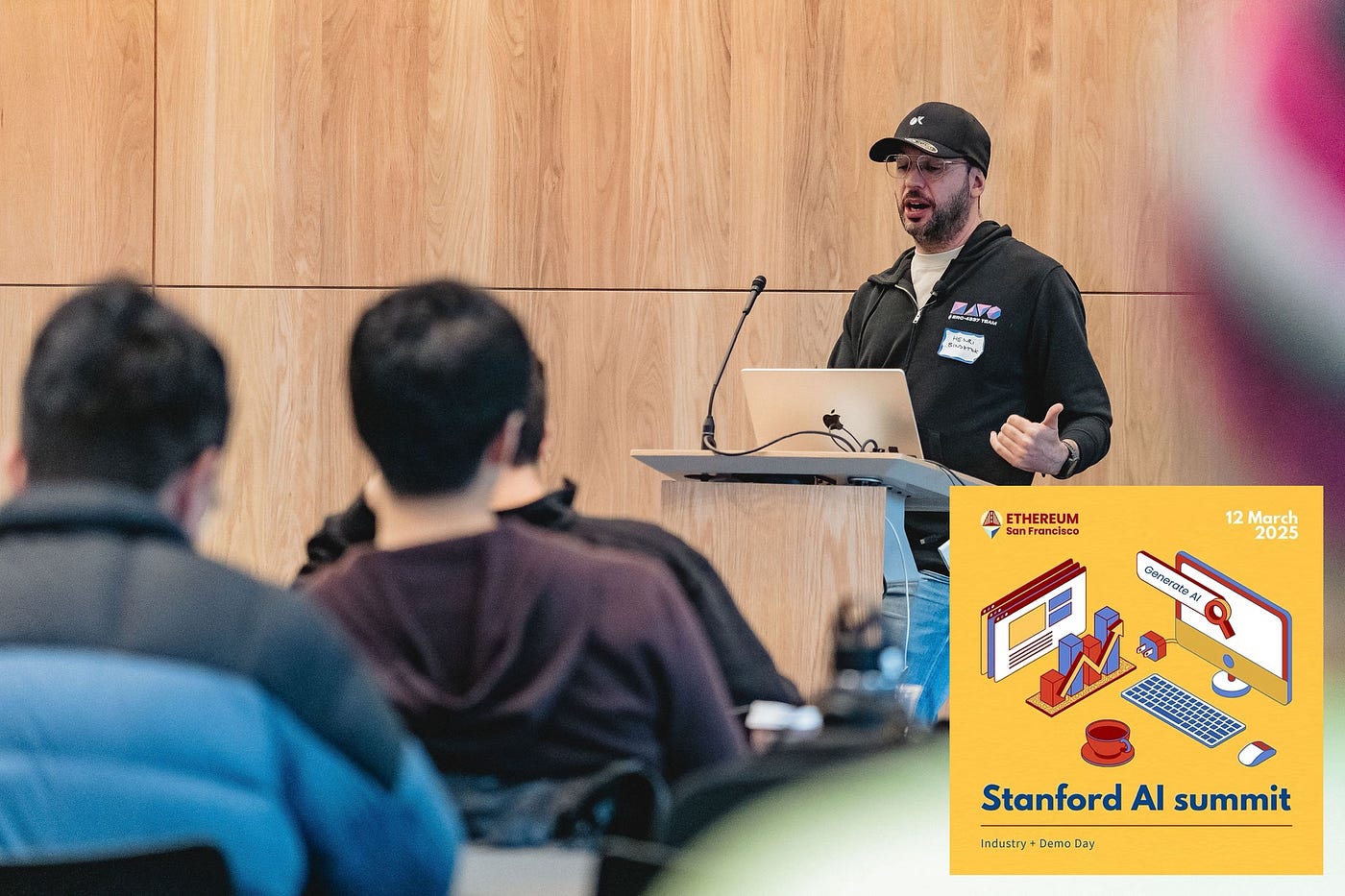
OKcontract’s Henri Binsztok speaks at Stanford Blockchain AI Summit
Key points from the talk
Parallel growth of blockchain complexity and LLMs-empowered “vibe coding”
Onchain development involves multiple layers of complexity and security. AI-assisted coding promises faster programming, but requires verification mechanisms.
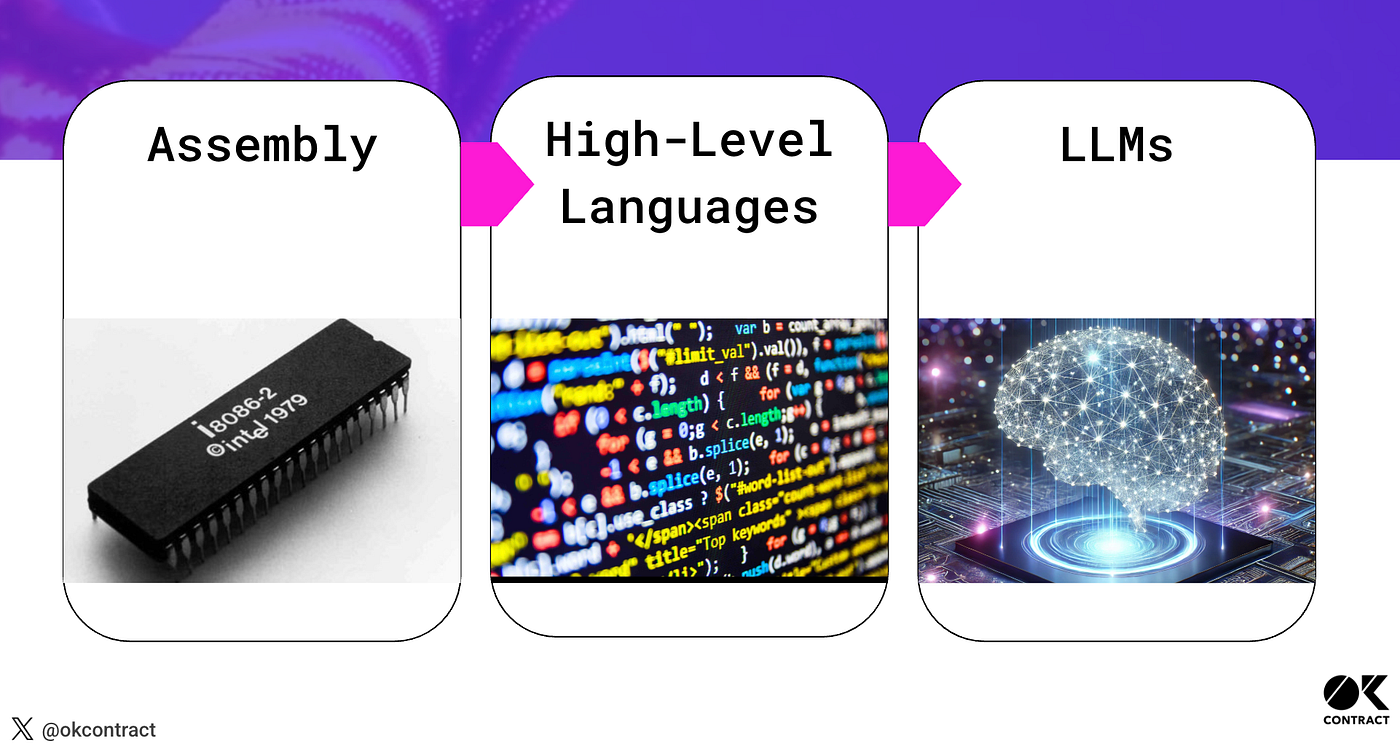
Historical shifts in programming languages
We moved from assembly to higher-level languages, and now to code generation with large language models. Each evolution made new systems more efficient.
Today’s dApp Challenges
Becoming a blockchain developer can take months. Security demands — from audits to formal checks — are substantial, and transactional interfaces remain tricky to implement.
Moving beyond HTML + JavaScript
In his recent blog post, Ethereum’s co-founder Vitalik Buterin stressed the idea of specifying dApp logic in a dedicated language, then automatically generating frontends:
A more advanced approach would be to move beyond HTML + Javascript, and write the business logic of dapps in a dedicated language […]. Browsers could then automatically generate a UI for any needed functionality. OKContract is doing this already.
OKcontract’s approach supports that goal through rigorous specification and secure practices.
Language to Specify & Verify
OKcontract designed an ‘AI-centric language’ for blockchain interactions, called Lambdascript. It is a domain specific language that explicitly defines semantics to:
- Write and maintain easily a large catalog of onchain interactions
- Enable formal verification and correctness proofs
- Support reasoning about blockchain interactions and/or smart contracts
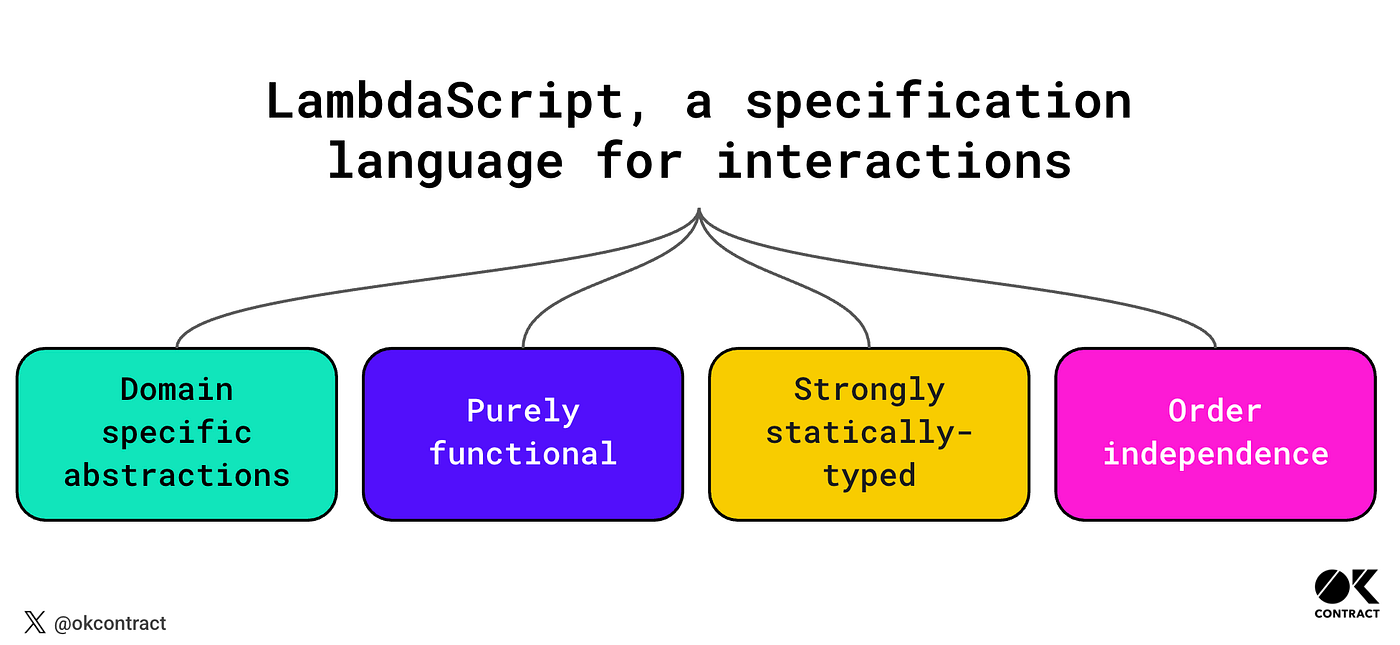
DSLs often lack extensive datasets, making training more difficult. To address challenges in program synthesis and code repair, Lambdascript is optimized for LLMs thanks to its core features:
- Domain-specific abstractions: Tackle evolving blockchain features, such as cross-chain interactions.
- Purely functional design: Avoid side effects for predictable outcomes and reliability.
- Strong static typing: Enhance clarity and minimize errors through explicit type definitions.
- Order-independent declarations: Offer flexibility without breaking functionality.
- Structured pretty-printing with type annotations: Help LLMs parse and generate accurate code by providing clear code formatting.
Watch the Stanford AI Summit Talk: https://youtu.be/KFOn5xUPwLQ
Originally published on Medium.